Renovate or rebuild?
When an ageing pool can be renovated inside its existing shell, when rebuilding is the better choice, and how we assess it.
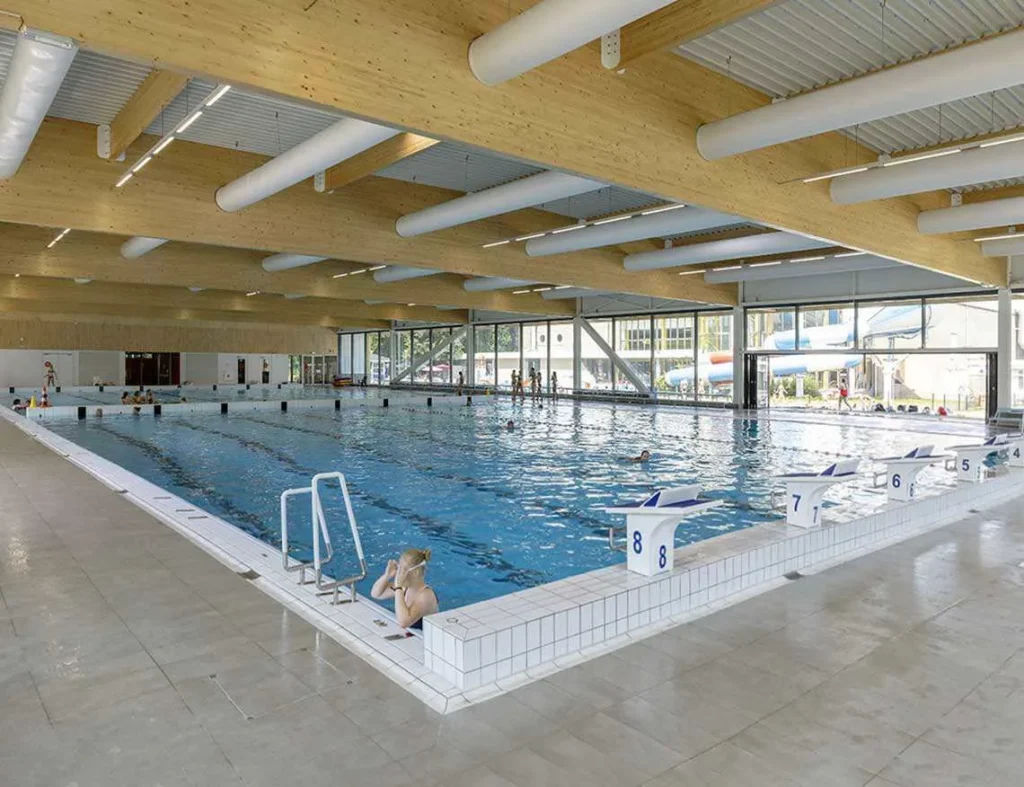
The question every owner faces
Many pools in the Netherlands and Belgium date from the 1970s and 1980s. At some point every owner faces the same question: repair once more, renovate thoroughly, or demolish and build new? The answer depends on the condition of the shell, the building around it and what the pool must do in the next thirty years.
Signs that a pool needs work
- Water loss that cannot be explained by evaporation or backwashing.
- Loose or cracked tiles and recurring grout repairs.
- A gutter or skimmer system that no longer meets current hygiene requirements.
- Corrosion of fittings and discolouration.
- Demands the pool cannot meet, such as a shallow zone for lessons, a movable floor or competition dimensions.
When renovation makes sense
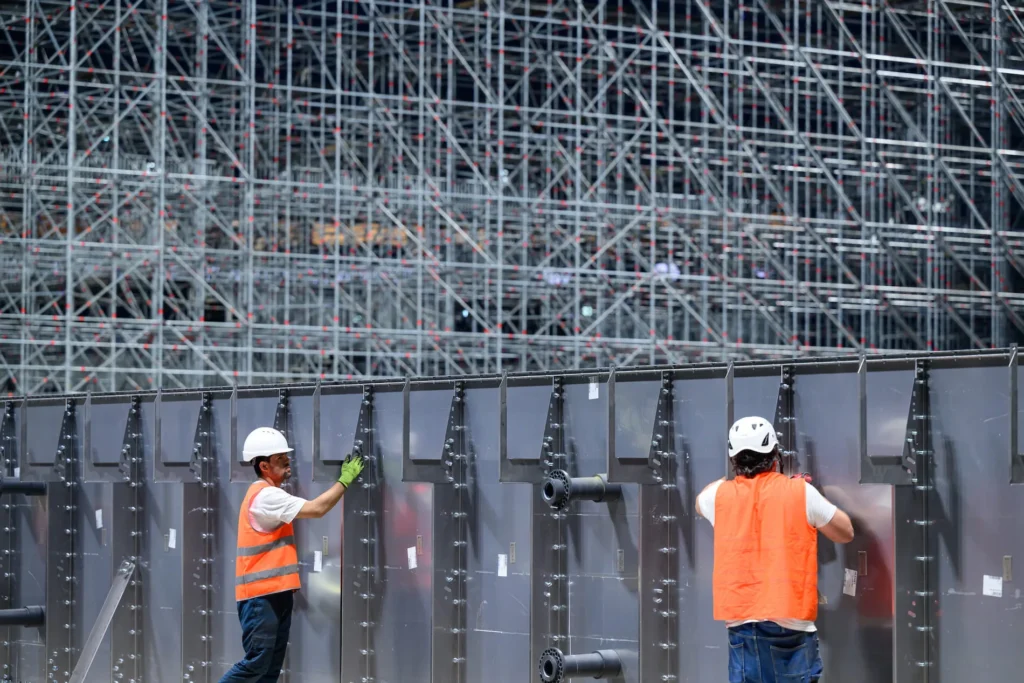
Renovation is usually the logical route when the concrete shell is still structurally sound and the building has years of life left. With Myrtha RenovAction, stainless steel rails, spacers and PVC-laminated panels are installed against the existing walls, a new floor membrane goes over the old floor, and a new overflow gutter is fitted. In most cases only the fittings on walls and floor are removed; the shell itself stays.
The pool gets a new, watertight lining and can be adapted at the same time: a shallower zone, recessed steps, a movable bulkhead or floor, or a conversion from skimmers to an overflow gutter. Competition dimensions can be preserved.
When rebuilding is the better choice
Rebuilding is the better choice when the shell has serious structural damage or settlement, when the building itself is at the end of its life, or when the new layout differs so much from the old one that little of the existing pool can be used. A new Myrtha pool is then built on a new slab; see New pool construction. We say so clearly when renovation is not the right answer.
Renovation options
Not every pool needs a complete renovation. Depending on the condition we renew the walls, the floor, the gutter or everything. For the gutter there are three routes:
- A new gutter in the old position, in a channel made by partly removing the old concrete gutter.
- A new gutter on the existing deck, without demolition. The pool becomes deeper, and the circulation pipes can be renewed inside the gutter without excavation.
- A lighter solution that keeps the existing gutter and adds an adjustable profile. We only recommend this in specific cases, because it solves less.
How long does it take?
Some examples from Myrtha projects: Bellerive-Plage in Lausanne, a 50 × 20 m pool from 1937, was renovated in seven weeks. Acquain in Andalo, Italy, reopened 60 days after work began. At Challenge Stadium in Perth, two 50-metre pools were renovated in a few weeks each. In Belgium, pools in Marcinelle and Saint-Servais (Namur) were renovated with RenovAction, and in the Netherlands the Twentebad in Hengelo.
The time for your project depends on the scope, the condition of the shell and the building work around the pool.
How we assess your pool
We start with a survey of the existing pool: dimensions, condition of the shell, gutter and circulation, and your plans for the coming years. On that basis we set out the options, each with an indication of time and cost. Send us the dimensions, year of construction and main issues of your pool, and you will get a realistic view, including when renovation is not the right choice.
Products
Related products
Pool Renovation
Renovate an ageing public or sports pool within the existing shell. Stainless steel with Myrtha RenovAction: limited demolition, shorter closure.
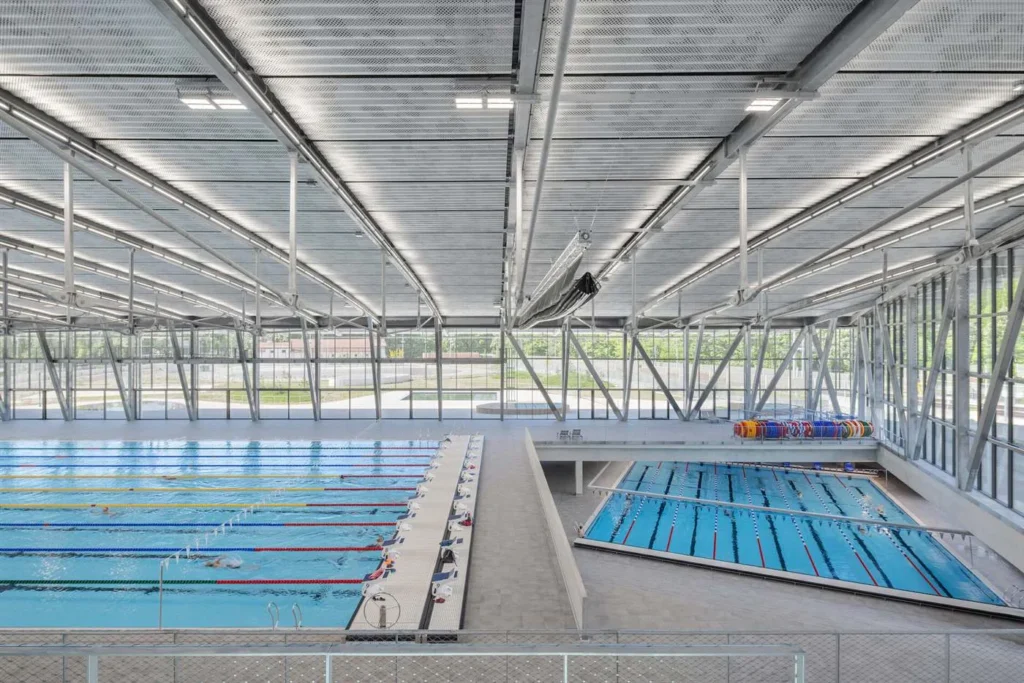
New Pool Construction
Myrtha Technology for new pools: PVC-laminated stainless steel panels on a bolted structure, with integrated waterproofing and a wide choice of finishes.
Knowledge
Read more
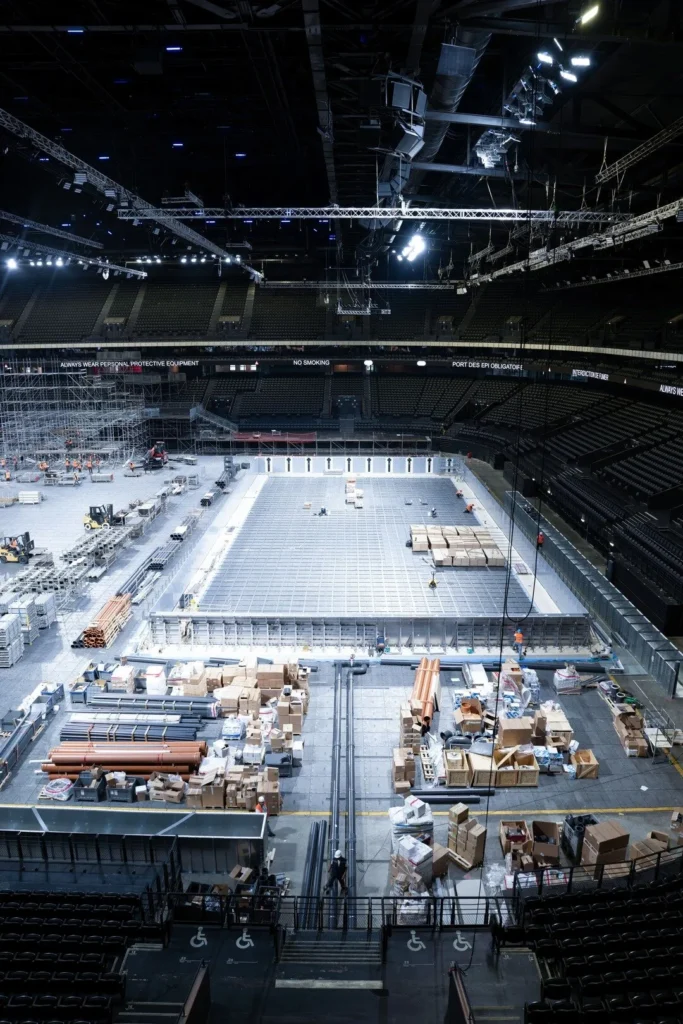
Stainless steel or concrete?
A factual comparison of stainless steel and concrete pools: build time, construction cost, lifecycle, weight, sustainability and total cost.
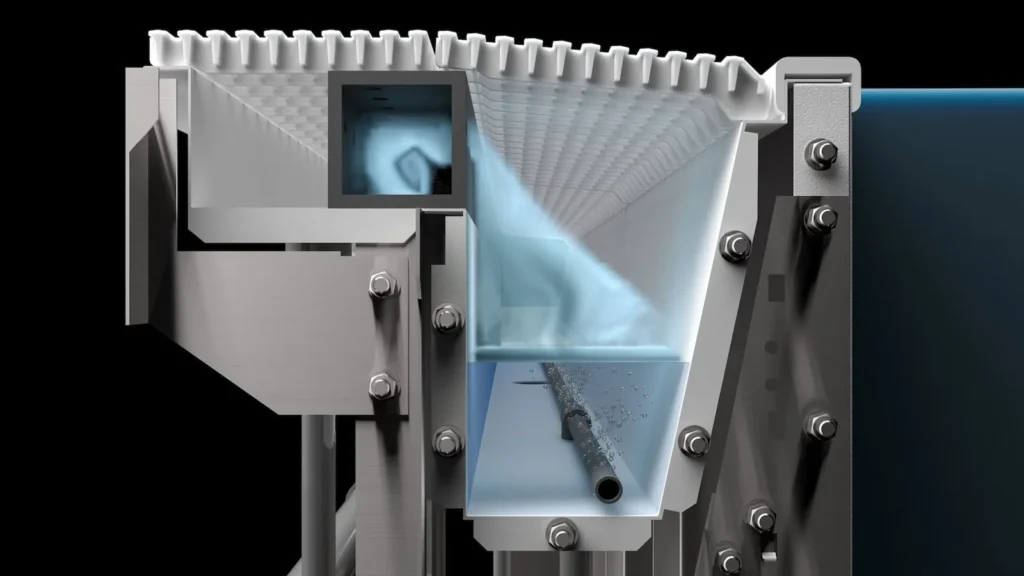
Ventilation and air quality
How chloramines form, what they mean for the health of staff and swimmers and for the lifetime of the pool building, and which measures help.
Sustainability
Embodied carbon, transport, renovation instead of demolition, recycling and certification: what a stainless steel pool contributes to sustainability, and what it does not.