Stainless steel or concrete?
A factual comparison for owners, operators and architects: build time, construction cost, lifecycle, weight and the situations in which each method is the better choice.
Two ways to build a pool
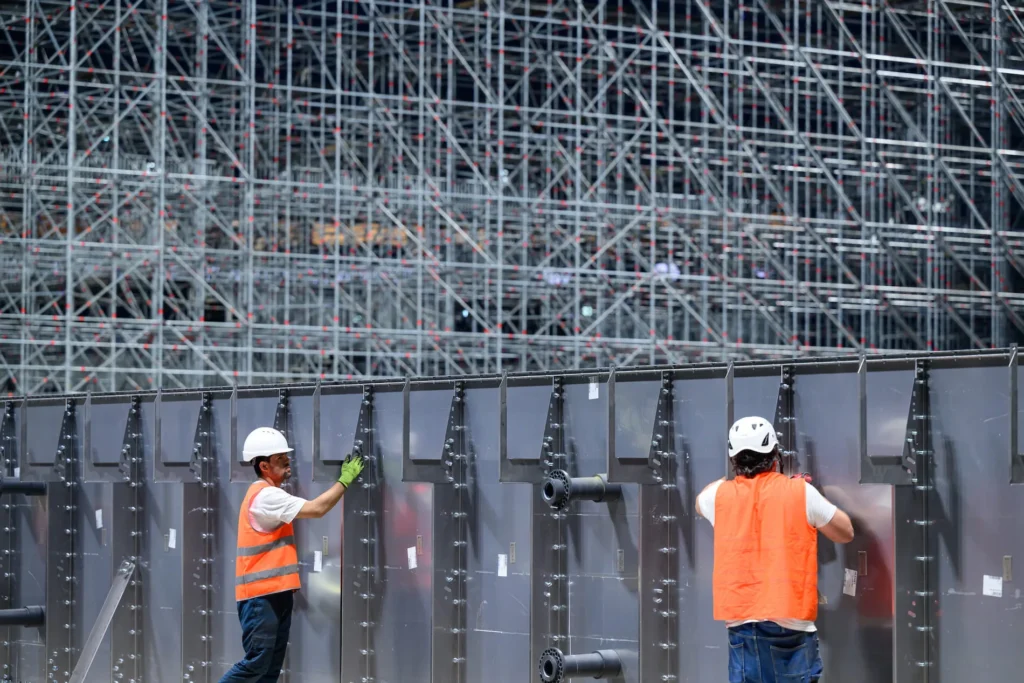
Most pools in the Netherlands and Belgium are built in concrete: excavation, formwork, reinforcement, casting, curing, waterproofing, tiling and testing. A modular stainless steel pool follows a different route. Panels are prefabricated in a factory and assembled on site on a concrete slab; a PVC layer on the panels and a reinforced membrane on the floor make the pool watertight.
Both methods can produce a good pool. The differences lie in build time, cost, how the pool ages, how it is maintained and renovated, and where it can be placed. This page sets them out, based on Myrtha’s documentation and an independent study from the United Kingdom.
Build time
Myrtha states that its system shortens the construction of a 50-metre pool by about eight weeks and of a 25-metre pool by about six weeks. The gain is mainly in what a concrete tank needs before it can be finished: curing, a water test of the structure and drying out before tiling.
The overall effect differs per project. In an example programme for a 25-metre pool with a teaching pool with movable floor, the concrete variant was complete around week 45 and the Myrtha variant around week 44. The more important difference: while the pool was being fabricated, the contractor could build the frame, roof and façade. The pool was no longer on the critical path, which lowers the risk of delay for the whole project.
Construction cost
An independent UK study by GT3 Architects, Engenuiti and CJ Consilium compared both methods for a leisure centre with a 25-metre, 8-lane pool and a teaching pool with movable floor. In that case the Myrtha variant was about 20% cheaper to build, mainly through a lighter structure, lower labour and equipment costs and, in most situations, no piles under the pool tank.
These figures are based on UK prices and conditions. They show a direction, not a price for your project.
Lifecycle and maintenance
- Structure and waterproofing are separate. In a stainless steel pool the waterproofing is a PVC layer that can be renewed without touching the structure. In a concrete pool, structure and waterproofing are one, so repairs often mean breaking out.
- Tiles and grout are the weak points of a concrete pool; the UK study mentions regrouting and tile replacement about every 15 years.
- The PVC layer of a Myrtha pool is expected to last around 20 years and is then replaced.
- Warranty: 25 years on the stainless steel structure and 10 years on the PVC laminate.
More in Maintenance and lifecycle cost.
Weight and location
One metre of Myrtha wall weighs about 70 kg, against about 900 kg for concrete. That is an advantage on upper floors and rooftops, in existing buildings, on soils with a low bearing capacity and in places that are hard to reach. The precision of prefabricated panels also makes it easier to integrate overflow, circulation and accessories such as movable floors.
In construction, a Myrtha pool has about 50% lower embodied CO₂ than a concrete pool, according to a study by ACOR Consultants commissioned by Myrtha. See Sustainability.
What does not differ much
Energy use in operation is similar. Stainless steel panels insulate less than a thick concrete wall, and the UK study expected utility costs to be about the same. Chemical use is also comparable, apart from the first months, when new concrete releases alkaline substances into the water. Day-to-day maintenance such as cleaning and water treatment is the same for any pool.
When concrete is the better choice
Concrete remains a good option for very organic or sculptural shapes and for heavy finishes such as mosaic or natural stone throughout the pool. It is also familiar to many contractors. We say so when that applies to your project.
Compare on total cost, not only on price
The initial investment is only part of the picture. Closure time, maintenance, future renovations and the length of the service life determine the total cost of a pool. We are happy to make that comparison with you, including the scenarios in which concrete comes out best.
Products
Stainless steel pools from Myrtha
New Pool Construction
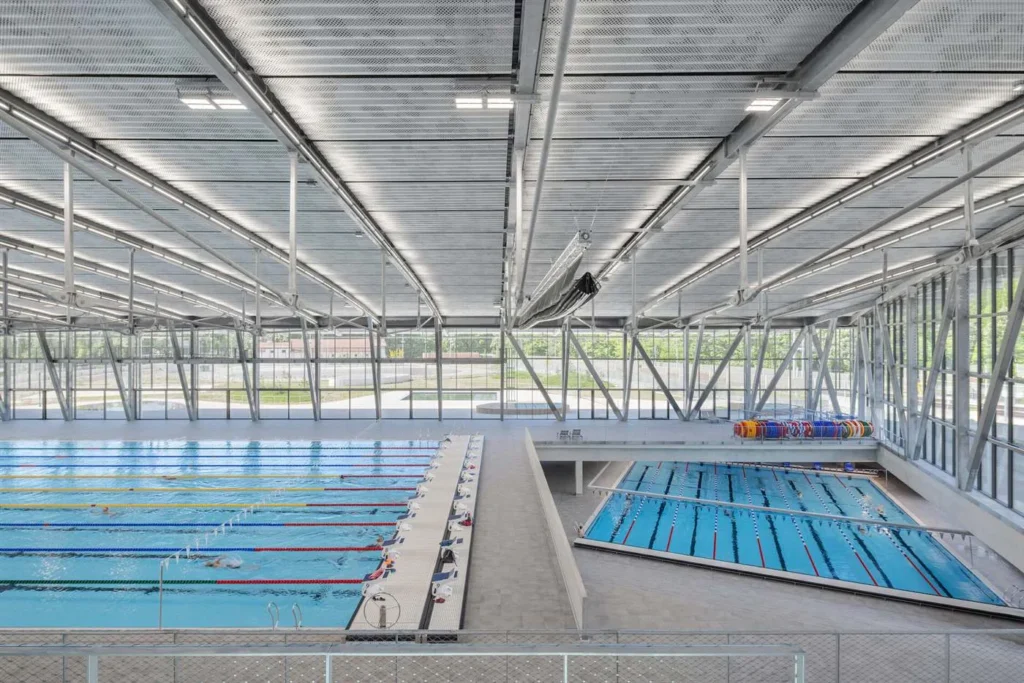
Myrtha Technology for new pools: PVC-laminated stainless steel panels on a bolted structure, with integrated waterproofing and a wide choice of finishes.
Pool Renovation
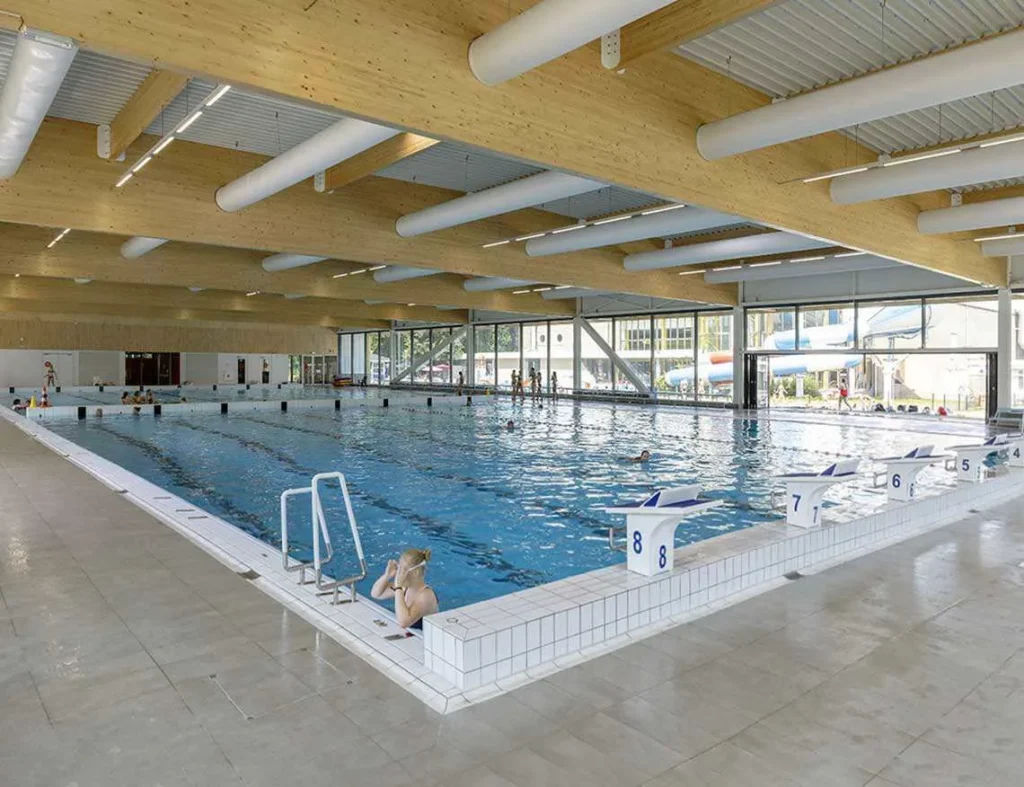
Renovate an ageing public or sports pool within the existing shell. Stainless steel with Myrtha RenovAction: limited demolition, shorter closure.
Knowledge
Read more
Ventilation and air quality
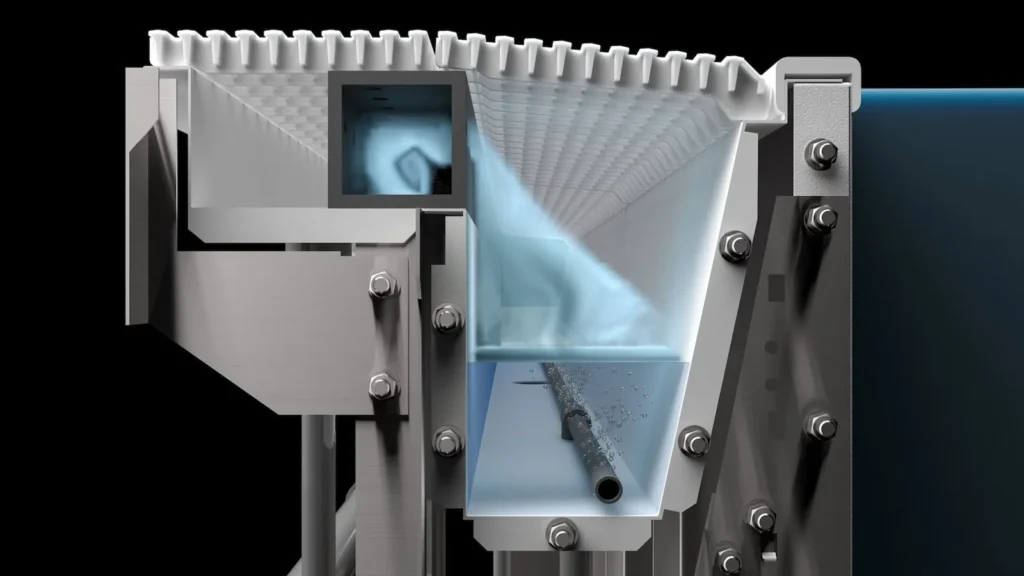
How chloramines form, what they mean for the health of staff and swimmers and for the lifetime of the pool building, and which measures help.
Sustainability
Embodied carbon, transport, renovation instead of demolition, recycling and certification: what a stainless steel pool contributes to sustainability, and what it does not.
Maintenance and lifecycle cost
How the construction method affects maintenance, closures and renovation over the life of a pool, with the evidence and its limits.