Sustainability of a stainless steel pool
What the construction method contributes, what it does not, and where the largest gains in a pool’s environmental impact are found.
Where the impact lies
A pool’s environmental impact comes from two phases: building it and running it. Running it, with heated water and air, ventilation, pumps and water use, accounts for the largest share over its life. Construction still matters. Concrete and reinforcing steel carry a large amount of embodied carbon, and demolishing and rebuilding a pool every few decades adds to that.
On this page we separate what the pool structure contributes from what depends on the building and the way it is operated.
Lower embodied carbon in construction
Myrtha commissioned the Australian engineering firm ACOR Consultants to compare the energy needed to build a Myrtha pool and a traditional concrete pool, including materials and transport. For a pool of 50 × 25 × 2 m the result was about 1.8 million MJ against 3.7 million MJ, and about 180 tonnes of CO₂ against 362 tonnes: roughly 50% less. For a pool of 25 × 25 m the reduction was 52%.
This is a comparison of materials and transport, commissioned by Myrtha. It is not a full life cycle assessment: the use phase and end of life are not included.
Transport and building site
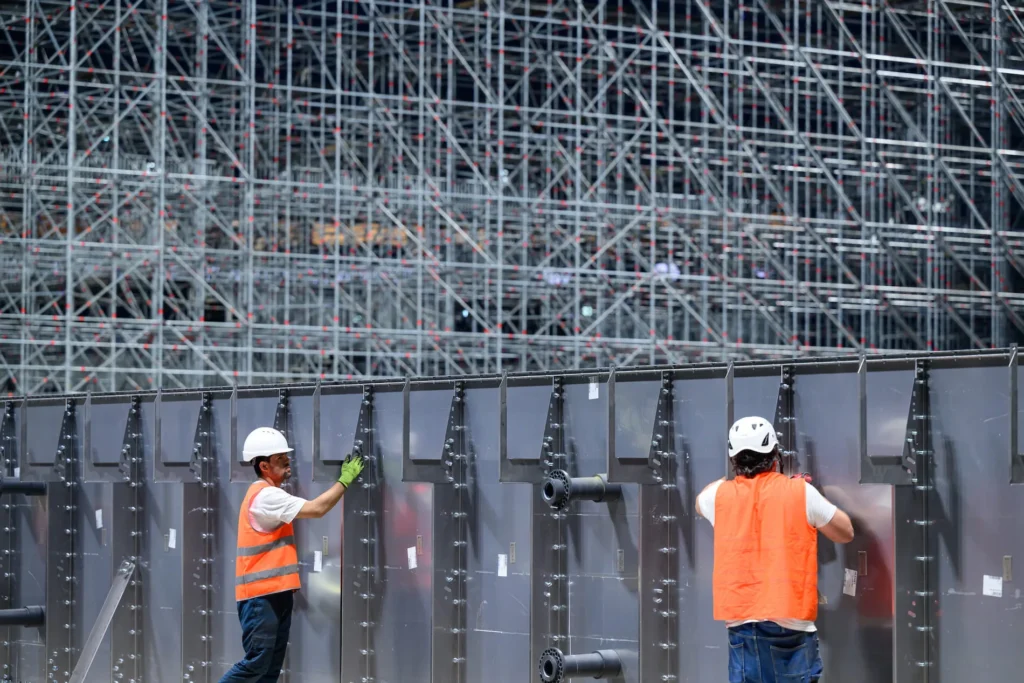
- An Olympic-size pool is shipped in two 40-foot containers.
- Panels are carried in by hand or by lift, without heavy machinery.
- There is no curing period and no structural water test. A new concrete tank is usually filled and monitored before finishing; in the independent UK study this meant about 800 m³ of water that was used once and drained.
- Less formwork, reinforcement and wet work on site means less site waste.
Renovate instead of rebuild
The most sustainable pool is often the one that already exists. With RenovAction, a new stainless steel pool is built inside the existing concrete shell. The shell stays in place, so there is far less demolition waste and new concrete than with a complete rebuild. Read more in Renovate or rebuild?
End of life
Stainless steel is fully recyclable and has a real scrap value, so it is collected and reused rather than landfilled. The panels are bolted, not cast, so a pool can be taken apart partly or completely.
LEED, BREEAM and Green Star
Myrtha has had its pool systems mapped against LEED v4 (2019) and against BREEAM and Green Star (2020). This helps a design team see which credits the pool can contribute to. Myrtha Breathe can add to this through indoor air quality. Certification always applies to the building as a whole; see Sustainable buildings.
What we do not claim
Stainless steel panels do not insulate like a thick concrete wall. The independent UK study expected energy costs in use to be about the same for both methods. Savings in operation come from the building and its installations: a pool cover outside opening hours, heat recovery in the ventilation, efficient pumps and good control. We are glad to think along with your adviser on these, but we do not attribute them to the pool structure.
Products
Related products
New Pool Construction
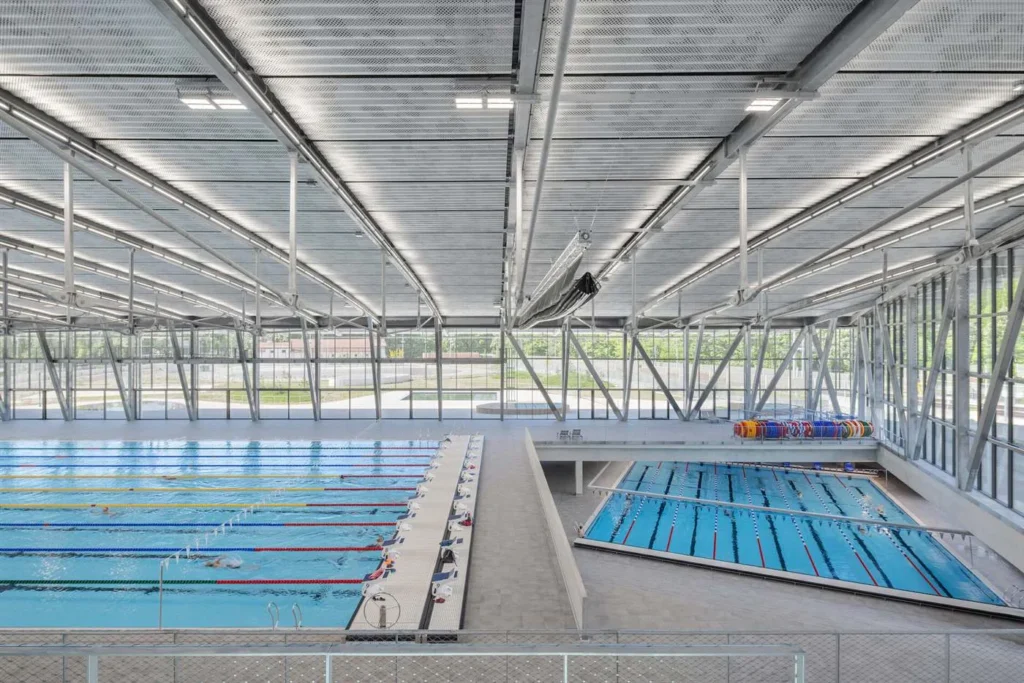
Myrtha Technology for new pools: PVC-laminated stainless steel panels on a bolted structure, with integrated waterproofing and a wide choice of finishes.
Pool Renovation
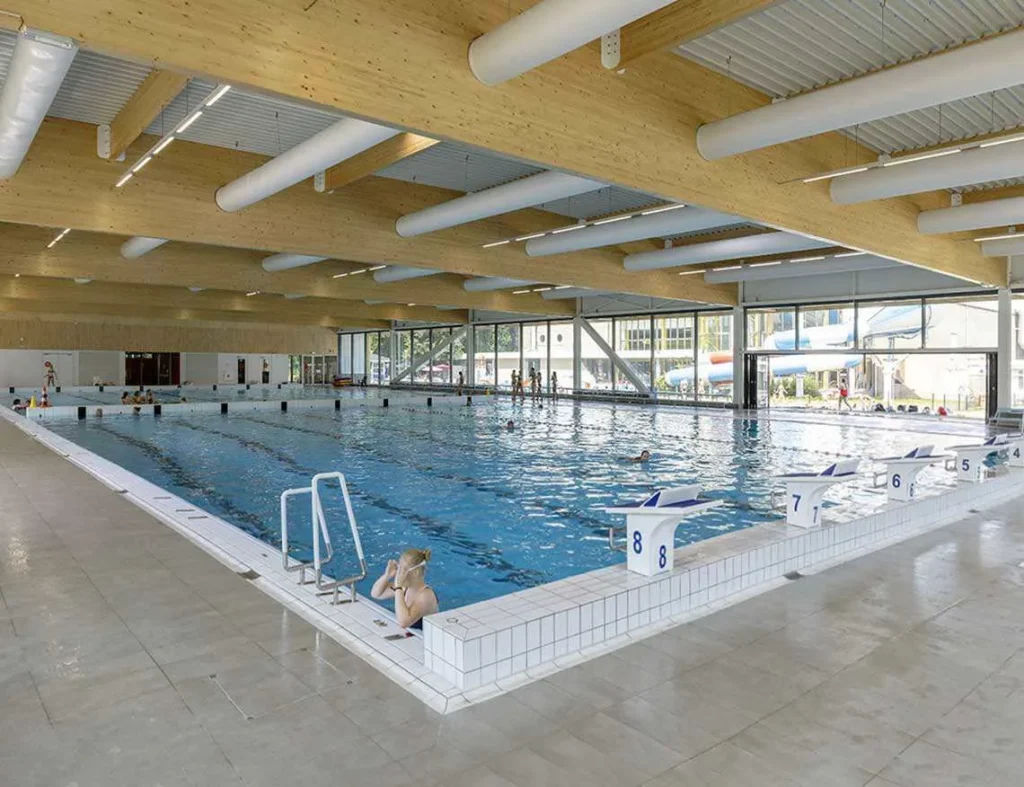
Renovate an ageing public or sports pool within the existing shell. Stainless steel with Myrtha RenovAction: limited demolition, shorter closure.
Sustainable buildings
Myrtha technologies contribute to LEED, BREEAM and Green Star, so the pool can be part of the building’s environmental certification.
Knowledge
Read more
Stainless steel or concrete?
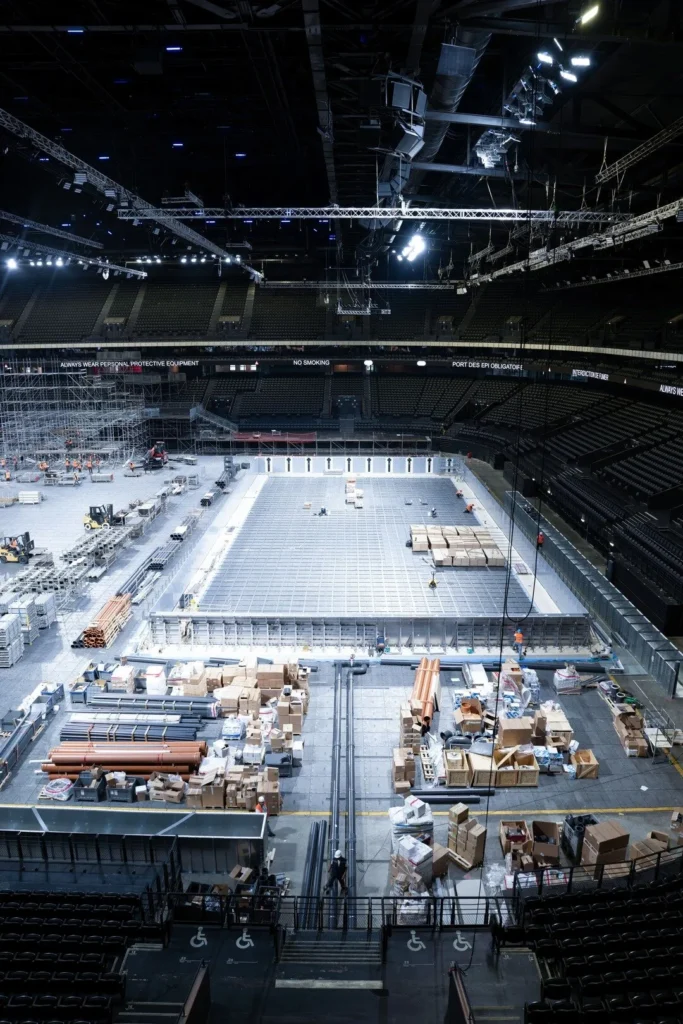
A factual comparison of stainless steel and concrete pools: build time, construction cost, lifecycle, weight, sustainability and total cost.
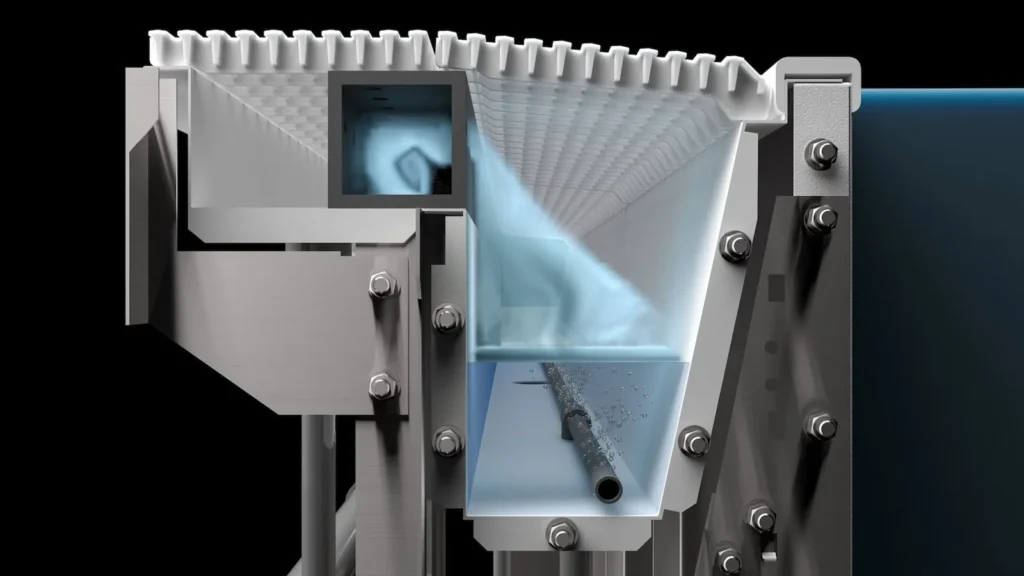
Ventilation and air quality
How chloramines form, what they mean for the health of staff and swimmers and for the lifetime of the pool building, and which measures help.
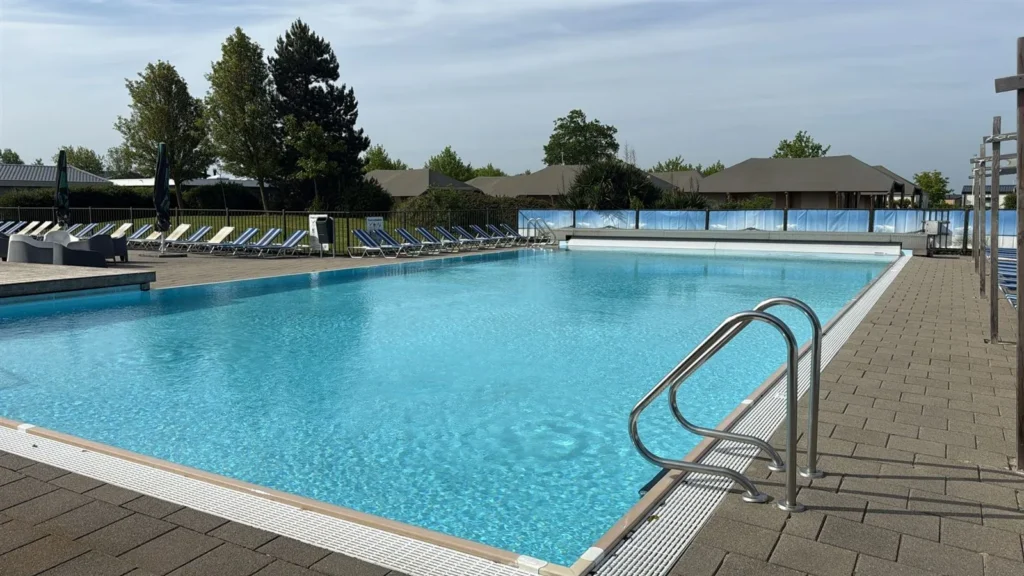
Maintenance and lifecycle cost
How the construction method affects maintenance, closures and renovation over the life of a pool, with the evidence and its limits.