Ventilation and air quality in indoor pools
Why the air above the water matters for swimmers, for the people who work in the pool hall every day, and for the lifetime of the pool and the building.
Why air quality matters
An indoor pool is a demanding environment. Warm water, high humidity and disinfection by-products meet in one enclosed space. How that air is handled determines how comfortable the pool is for swimmers, how healthy it is for staff who spend full working days there, and how long the building and its installations last.
Ventilation is often treated as a building services topic, separate from the pool. In practice the two are closely linked: what happens in the water and at the water surface largely determines what ends up in the air.
Where the pool smell comes from
Chlorine keeps pool water safe. When it reacts with nitrogen compounds that swimmers bring into the water, such as sweat, urine and skin particles, it forms chloramines. The most volatile of these, trichloramine, escapes from the water into the air. It is what most people recognise as the chlorine smell of an indoor pool. A well-run pool with clean air hardly smells at all.
Trichloramine is heavier than air, so it tends to stay in the layer just above the water, which is exactly where swimmers breathe. The more swimmers and the more movement in the water (lessons, water play, competitions), the more is released.
Health of staff and swimmers
Trichloramine irritates the eyes, skin and airways. Swimmers notice it as red eyes, a dry cough or a tight chest. Lifeguards, swimming teachers and trainers are exposed for much longer: they spend whole shifts in the pool hall. Studies among pool staff have linked long-term exposure to more respiratory complaints, and several European countries apply guideline values for trichloramine in pool air.
Young children, who play close to the water surface, and competitive swimmers, who breathe deeply for long periods, are more exposed than the average visitor. Good air quality is therefore part of a healthy workplace and a responsible pool, not only a matter of comfort.
Lifetime of the building and the pool
The same air affects the building. Chloramines and chlorides in warm, humid air are corrosive. They attack metal fittings, ceiling suspensions, fixings and installations, and speed up the ageing of finishes. In the past, corrosion of load-bearing steel parts in pool halls has contributed to ceiling failures; European design rules therefore set specific requirements for steel components in pool atmospheres. High humidity adds the risk of condensation in roofs and façades, with damage that often only becomes visible years later.
The pool itself benefits as well. The walls of a Myrtha pool are laminated with PVC on the water side, but gutters, grilles, ladders and accessories remain exposed to pool water and pool air. Good ventilation and water treatment keep their condition stable for longer.
What helps
- A ventilation design made for a pool hall. Supply and extraction should refresh the air near the water surface, not only the air under the roof. Air temperature is usually kept slightly above water temperature to limit evaporation, with controlled humidity.
- Enough fresh outdoor air, with heat recovery to keep energy use reasonable.
- Water treatment that keeps combined chlorine low, with sufficient filtration and, where appropriate, UV treatment.
- An overflow gutter and good circulation, so the surface water, where contamination collects, is continuously removed and treated. See Strahlenturbulenz.
- Showering before swimming. It reduces the nitrogen load on the water considerably, and with it the formation of chloramines.
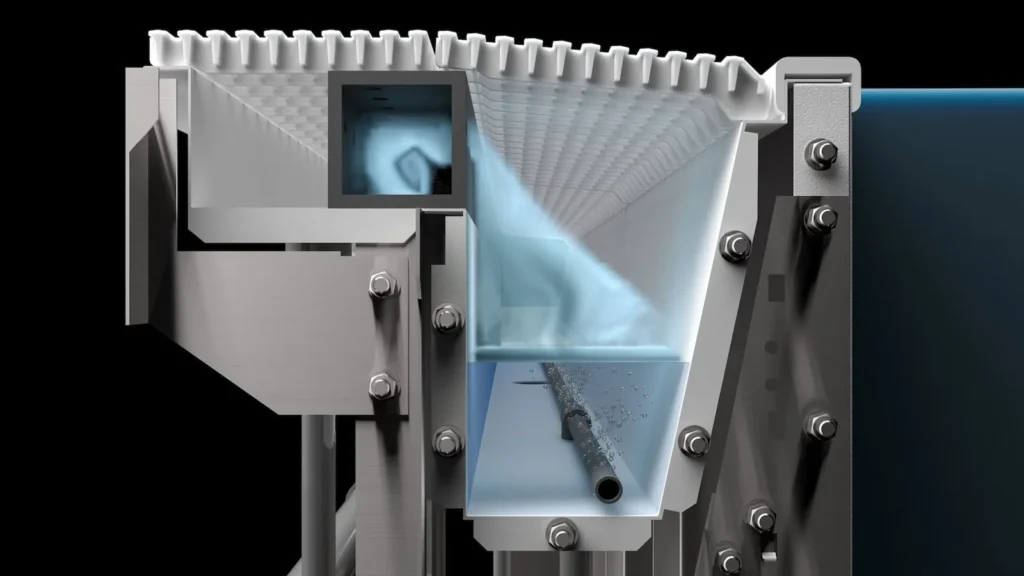
- Extraction at the source. Myrtha Breathe draws chloramine-laden air out of the overflow gutter before it spreads through the hall. In measurements in one arena in Paris, trichloramine just above the water dropped from 68 to 16 µg/m³.
Our role
EWAC Pools does not design ventilation systems. We do design and build the pool, the overflow gutter and the circulation, and these determine much of what ends up in the air. We coordinate early with the architect and the building services adviser, so that pool and air handling are designed as one system.
For existing pools with air quality complaints, we can assess whether changes to the gutter and circulation can contribute, and whether Myrtha Breathe is an option.
Products
Related products
Myrtha Breathe
Myrtha Breathe captures volatile disinfection by-products such as trichloramine in the overflow gutter, before they spread through the pool hall.
Strahlenturbulenz
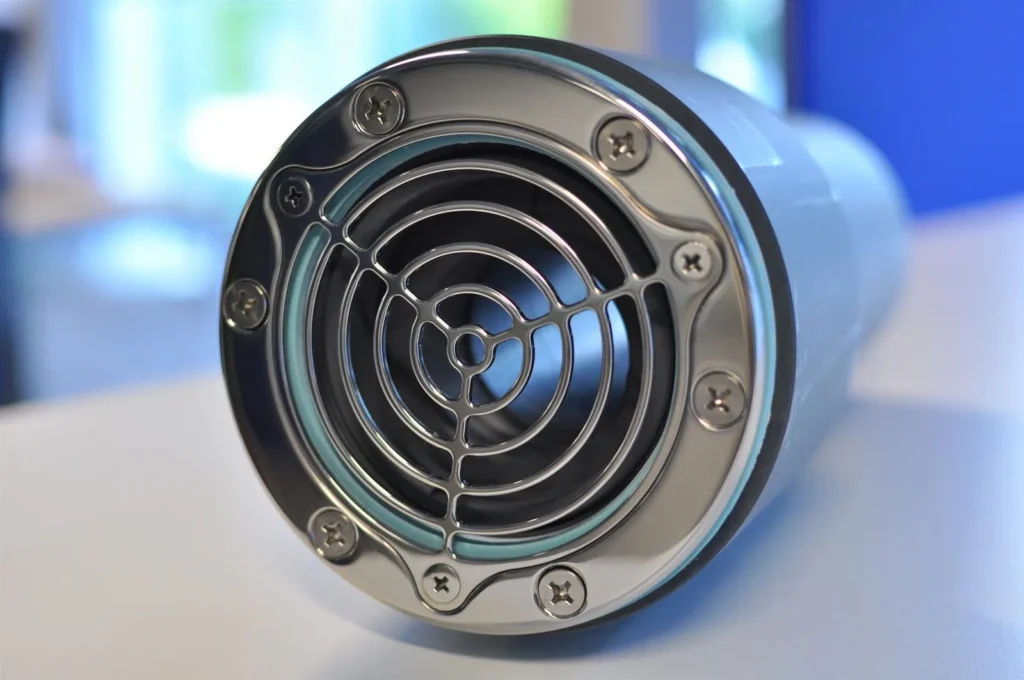
A circulation system with wall-only water inlets and adjustable nozzles, validated with CFD analysis. No piping in the pool floor.
Pool Renovation
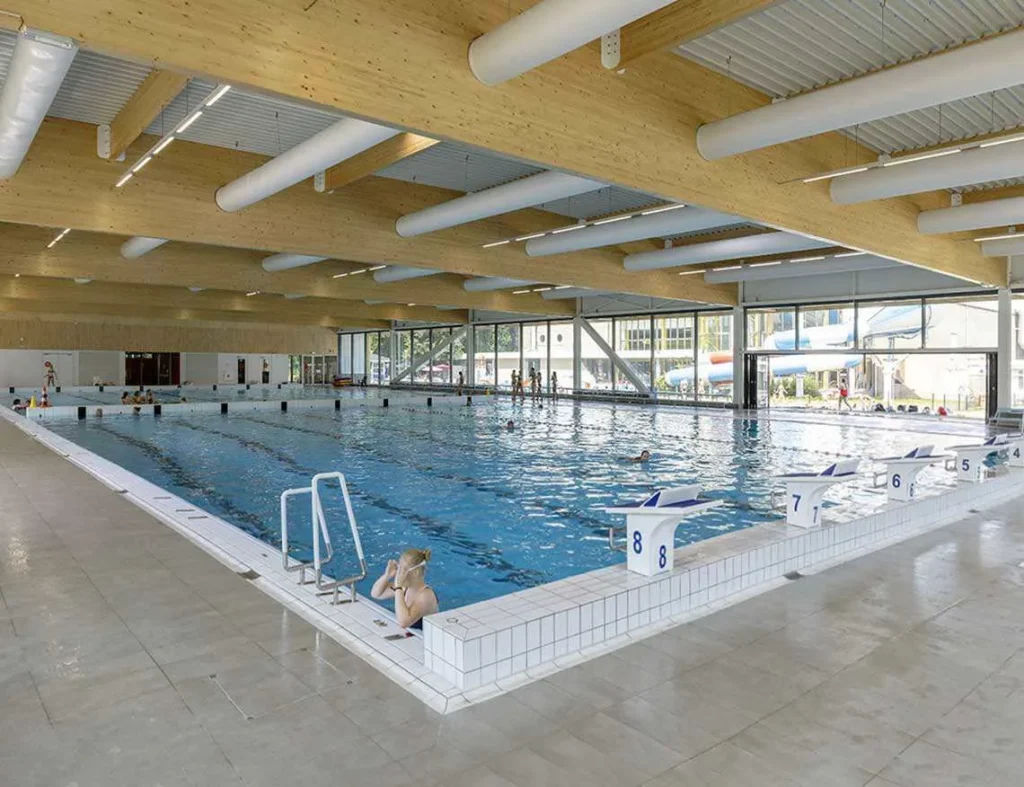
Renovate an ageing public or sports pool within the existing shell. Stainless steel with Myrtha RenovAction: limited demolition, shorter closure.
Knowledge
Read more
Stainless steel or concrete?
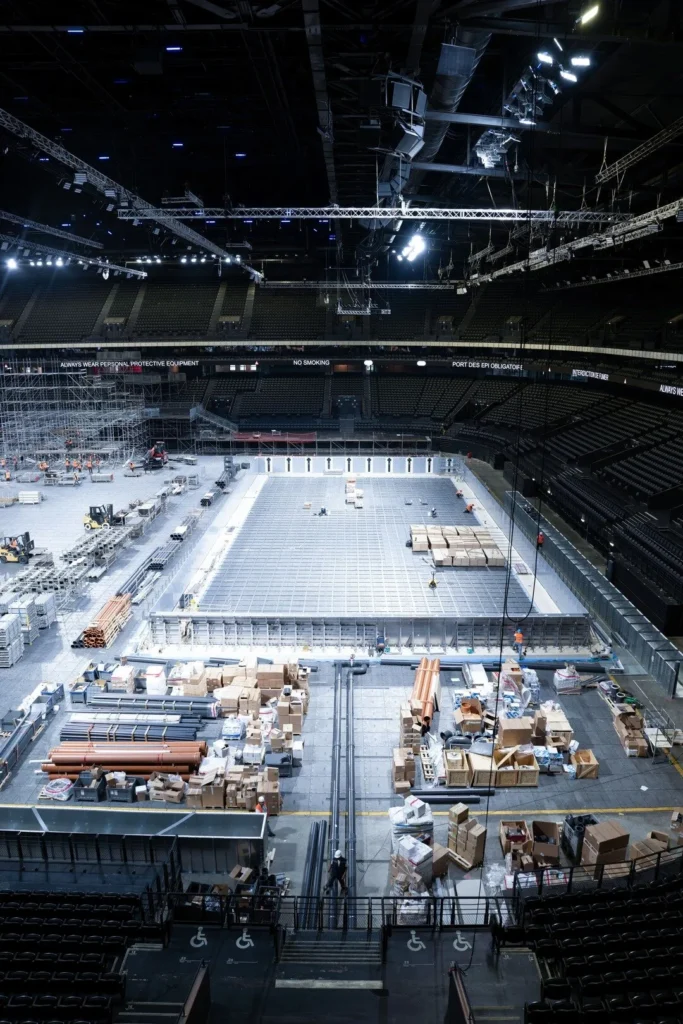
A factual comparison of stainless steel and concrete pools: build time, construction cost, lifecycle, weight, sustainability and total cost.
Sustainability
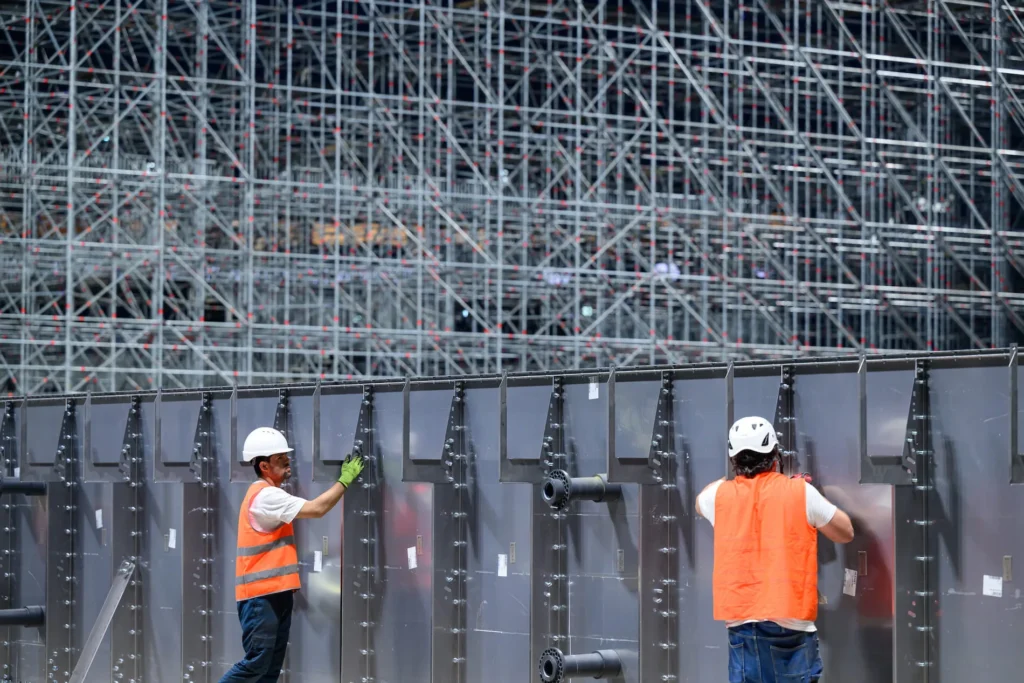
Embodied carbon, transport, renovation instead of demolition, recycling and certification: what a stainless steel pool contributes to sustainability, and what it does not.
Maintenance and lifecycle cost
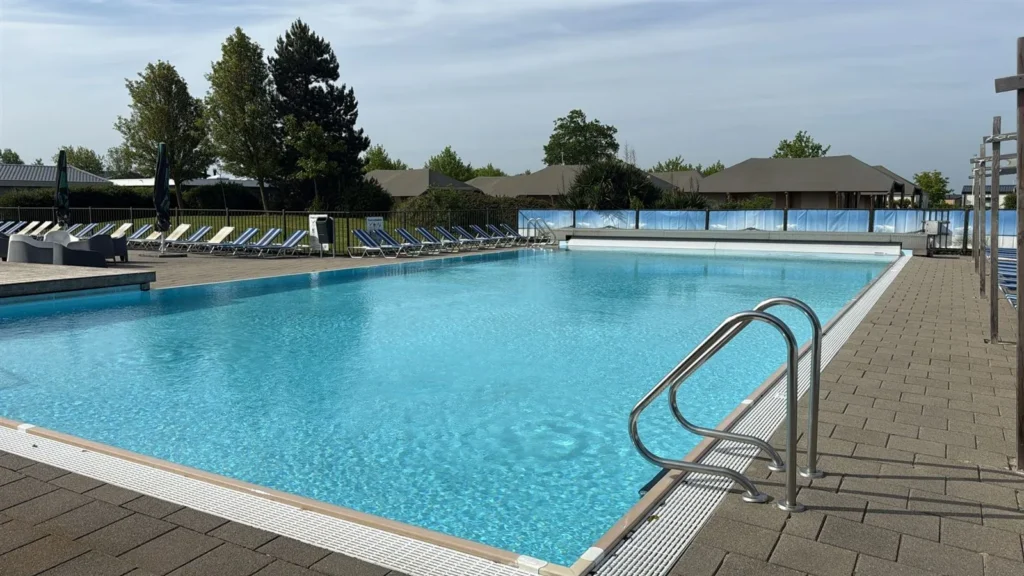
How the construction method affects maintenance, closures and renovation over the life of a pool, with the evidence and its limits.